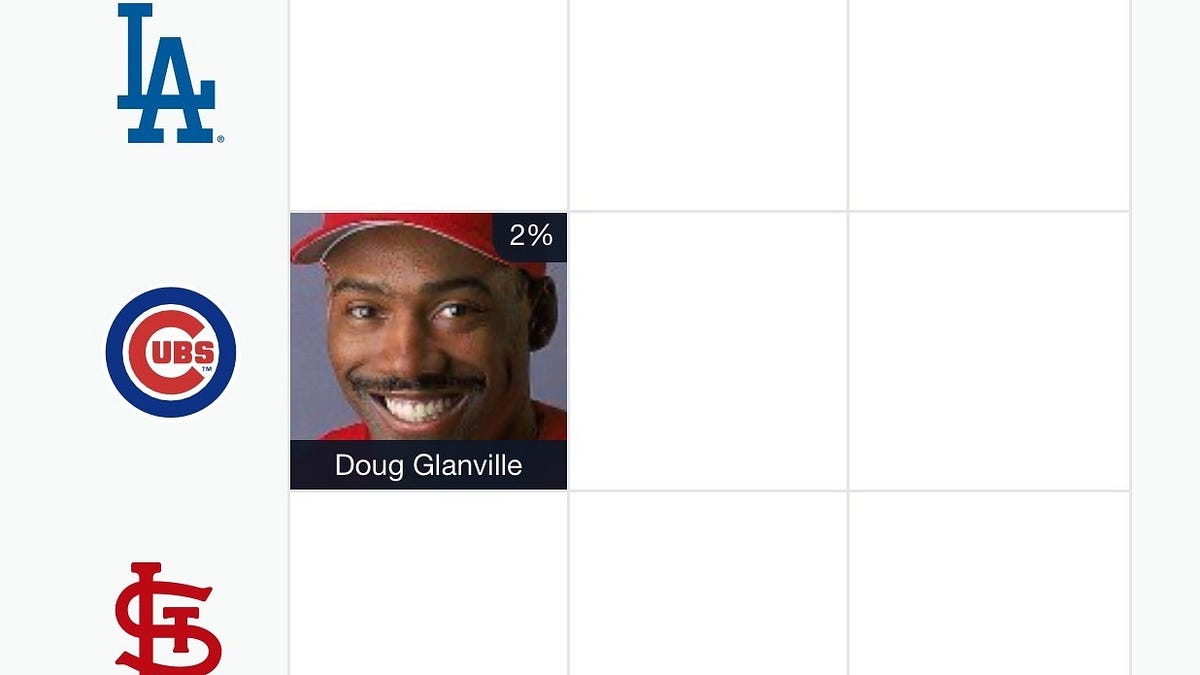
Achieve a Perfect Rarity Score: Immaculate Grid Strategy & Tips
In the vibrant world of daily sports puzzles, few games have captured the imagination quite like the Immaculate Grid. This viral sensation challenges sports fans to delve deep into athletic history, connecting players to teams, statistics, and accolades across a 3x3 matrix. While simply completing the grid is a satisfying feat, the true measure of mastery lies in achieving a "Perfect Rarity Score" – a testament to both your encyclopedic sports knowledge and your strategic prowess. This comprehensive guide will equip you with the insights and tactics needed to not only complete the grid accurately but also to pick the most unique, low-rarity players, elevating your game to an elite level.
Understanding the Immaculate Grid Core Mechanics
At its heart, the Immaculate Grid is a daily sports guessing game available on platforms like immaculategrid.org. Each day presents a fresh puzzle, testing your knowledge in baseball (MLB), basketball (NBA), football (NFL), hockey (NHL), and soccer. Your mission is deceptively simple: fill a 3x3 grid by identifying professional athletes who meet the criteria of both their corresponding row and column.
The categories defining the rows and columns can vary wildly, typically falling into three main types:
- Teams: Specific professional franchises, such as the New York Yankees or Houston Astros.
- Stats: Statistical milestones achieved by players, for example, a "40+ HR season," "2,000+ career hits," or "6+ WAR Season."
- Accolades: Major individual awards like an "MVP" or "Cy Young."
For each of the nine squares, you must name an athlete who satisfies both intersecting conditions simultaneously. For instance, if a row is "Houston Astros" and a column is "MVP," your player must have earned an MVP award while playing for the Astros. Similarly, a square at the intersection of "New York Yankees" and "Boston Red Sox" requires a player who suited up for both storied franchises at some point in their career.
As you type a player's name into a cell, a dropdown list of qualified athletes appears, simplifying the selection process. The critical rules to remember for every Immaculate Grid challenge are:
- You have only nine total guesses to fill the grid.
- Each correct or incorrect answer consumes one of these attempts.
- Crucially, you can only use each player's name once across the entire grid.
Understanding these fundamental rules and the varying category types is the first step towards a perfect game, setting the stage for strategic player selection.
The Path to a Perfect Game: Accuracy First
Before you can even dream of a low rarity score, your primary objective must be to achieve a "Perfect Game." This means accurately completing all nine cells without making a single mistake within your initial nine guesses. Without perfection, rarity is irrelevant. Here's how to prioritize accuracy:
Mastering Rule Nuances for Precision Picks
The Immaculate Grid features specific requirements for different category combinations. Misinterpreting these is a common pitfall:
- Player-Team Connections: When a square links two teams (e.g., Yankees & Red Sox), the athlete simply needs to have played for both teams at any point in their career.
- Stats Tied to a Specific Season: If the criteria involve a team and a season-specific statistic (e.g., "Houston Astros" and "40+ HR Season"), the player must have achieved that stat line while on that specific team's roster during that year. This requires precise recall.
- Career Stat Flexibility: This is a key distinction. If the square involves a team and a career stat (e.g., "Minnesota Twins" and "2,000+ career hits"), the player only needs to be an alumnus of that team. They did not necessarily have to hit the career milestone while playing for that team. This rule is a goldmine for rarity hunting, as we'll discuss later.
Strategic Guessing for Error-Free Play
- Start with the "Easies": Identify the most straightforward intersections first. These are often two-team squares involving iconic players or very common team-stat combinations. Getting these right builds confidence and uses up valuable initial guesses on sure things.
- Double-Check Your Knowledge: Before confirming a selection, quickly run through the criteria in your mind. Did this player truly play for both teams? Did they win that award with this specific team? The dropdown list helps, but your internal verification is key.
- Avoid Obscurity Prematurely: While rarity is the goal, don't sacrifice accuracy by forcing an obscure player into a square if you're not 100% sure. It's better to pick a more obvious (but correct) player for a perfect game, then strategize for rarity on subsequent plays or other squares.
Mastering the Rarity Score: Beyond Just Correctness
Once you consistently achieve perfect games, the real challenge and allure of the Immaculate Grid emerge: optimizing your Rarity Score. This score is calculated based on how unique your correct picks were. The lower your score, the better – meaning you chose players fewer other participants selected. A low rarity score signals true depth of knowledge, separating the casual fan from the seasoned sports historian.
Strategies for Hunting Low Rarity Picks
- Think Obscure, Not Obvious: For common intersections (e.g., Yankees/Red Sox), everyone will pick Babe Ruth or Roger Clemens. To lower your rarity, consider players who had shorter, less memorable stints with one of the teams. Think of a journeyman relief pitcher or a utility player who spent a year with a marquee franchise but is primarily remembered for another.
- Leverage "Career Stat Flexibility": As mentioned, this rule is crucial. If a square is "Team X" and "2,000+ Career Hits," look for a player primarily known for another team but had a cup of coffee (or a brief, uneventful stint) with Team X, while still accumulating over 2,000 career hits elsewhere. For example, a star slugger who finished their career with a lesser-known team for a single season is an excellent rarity candidate for that team/career stat square.
- One-Year Wonders and Journeymen: These types of players are gold. Identify players who had a single exceptional season (if a season stat is required) or bounced around multiple teams. Their names are less likely to be top-of-mind for most players.
- Remember Historical Team Names: Some teams have changed names or locations (e.g., Washington Senators -> Texas Rangers, Houston Colt .45s -> Houston Astros). Knowing these historical connections can unlock unique player choices for older grids.
- Cross-Referencing: For two-team intersections, think of players who had a standout career with Team A but were traded late in their career to Team B, where they had minimal impact. These are often forgotten connections.
The key is to anticipate what the majority will guess and deliberately choose a correct alternative that is less common. This requires a deeper dive into player rosters and career paths beyond the household names.
Advanced Immaculate Grid Strategies for Consistent Perfection
To consistently achieve a perfect rarity score on the Immaculate Grid, a methodical approach is essential. It's not just about recalling names; it's about strategic thinking.
Pre-Game Planning and Brainstorming
- Analyze the Entire Grid First: Before typing a single name, examine all nine squares. Identify the most difficult intersections and the most common ones. This helps you allocate your mental resources.
- Brainstorm Multiple Options: For each square, try to think of 2-3 potential players. This gives you flexibility, especially if one of your initial choices is a high-rarity pick for another square.
- Player Exclusion Strategy: Remember, you can only use each player once. As you fill squares, mentally (or physically, if you like to jot notes) cross off those players from your list of possibilities for other squares. This prevents you from running into dead ends where your ideal player for a late square has already been used. This is particularly crucial for players who might fit multiple criteria (e.g., a Hall of Famer who played for two common teams).
Leveraging Your Knowledge Base
While the purest form of Immaculate Grid involves solely memory, seasoned players often develop mental databases or even discreetly use resources like Wikipedia or Baseball-Reference.com for verification when practicing or aiming for extremely low rarity scores. The goal is to build your internal database over time through regular play and learning from past grids.
The "Reverse Engineering" Approach
Sometimes, the easiest way to find a rarity pick for an intersection is to think of an obscure player you know and then try to find a square they fit. For example, if you recall a player who had a very short stint with a specific team but had a significant career elsewhere, see if that player fits any "Team X" and "Career Stat" intersections. This can yield surprisingly unique results.
Ultimately, consistent success on the Immaculate Grid, especially in achieving low rarity scores, comes down to a combination of vast sports knowledge, meticulous rule adherence, and strategic player selection. Every grid offers a new challenge and an opportunity to deepen your appreciation for sports history.
Conclusion
The Immaculate Grid is more than just a daily puzzle; it's a dynamic challenge that blends sports history with strategic thinking. Achieving a perfect rarity score is the ultimate testament to your expertise, requiring not just accuracy but also a nuanced understanding of player careers and the game's intricate rules. By prioritizing flawless execution, delving into obscure player histories, and employing advanced strategies like pre-game planning and player exclusion, you can consistently navigate the grid with precision and flair. So, embrace the daily challenge, expand your sports knowledge, and aim for that coveted low rarity score – proving your mastery over the Immaculate Grid, one unique player pick at a time.